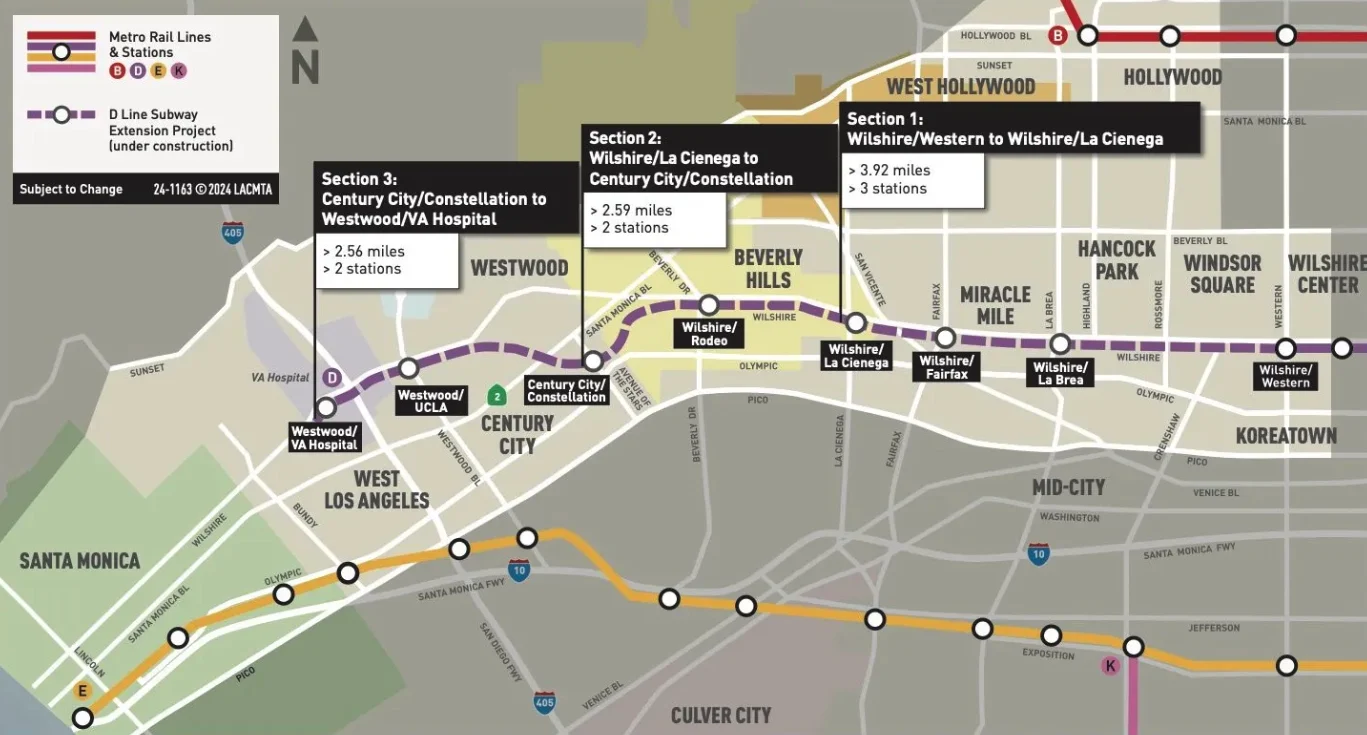
West Wood blvd – 15 May 2026 | The launch of Los Angeles Metro‘s D Line extension has turned the city’s west‑east commute into a faster, underground experience, and the westwood boulevard map is already becoming an essential tool for riders navigating the new stations from downtown to the UCLA campus area.
Spanning 3.92 miles, the $9.7 billion project adds three underground stations at Wilshire/La Brea, Wilshire/Fairfax and Wilshire/La Cienega. These stops sit within walking distance of cultural landmarks such as LACMA, the Academy Museum, the Grove, and the Beverly Center, and they mark the first heavy‑rail openings in Los Angeles in more than a quarter‑century. The extension links the historic Union Station directly to Beverly Hills in just 21 minutes, cutting the typical 45‑minute car trip in half.
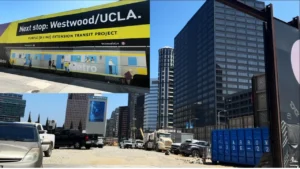
Metro officials tout the time savings as a “game changer.” Professor Brian Taylor of UCLA’s Luskin School of Public Affairs emphasizes that the line must be “the best way to get around” to persuade Angelenos to abandon their cars. The D Line’s reliability, frequency, and integration with existing bus routes are being closely watched as benchmarks for future rail projects across the region.
Beyond daily commuters, the new subway is timed to serve major global events. The 2026 FIFA World Cup and the 2028 Olympic and Paralympic Games will bring millions of visitors to the city, and the D Line offers a high‑capacity, low‑emission corridor that can alleviate surface‑street congestion during peak event periods. Local businesses along Wilshire anticipate increased foot traffic, especially in neighborhoods that were previously hard to reach without a car.
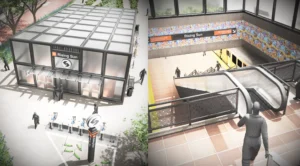
Despite the optimism, experts caution that ridership growth will not be automatic. The A and B Lines still record roughly 16‑17 million weekday boardings, but they serve established commuter corridors. The D Line must prove its utility against entrenched car culture, limited parking, and rising fuel costs. Metro’s own data suggests that a robust marketing campaign and seamless fare integration are critical to converting occasional riders into daily users.
Looking ahead, the line is slated to extend another five miles to Westwood by the fall of 2027, adding four more stations that will terminate near the UCLA campus. When the final segment opens, the westwood boulevard map will be updated to reflect the full network, giving residents and visitors a clear visual of the east‑west rail spine that cuts through the city’s most densely populated districts. Planners expect the Westwood extension to further reduce travel times, making a downtown‑to‑UCLA trip possible in roughly 25 minutes.

Community response has been enthusiastic. Residents near the new stations reported smoother commutes, while local merchants note a surge in lunchtime customers. The subway’s inaugural weekend featured free rides, a celebrity‑filled ribbon‑cutting, and even a life‑sized saber‑toothed tiger puppet, underscoring the city’s desire to celebrate its transit milestone.
In conclusion, the D Line’s debut represents a pivotal moment for Los Angeles’s transportation landscape. By delivering a faster, more reliable alternative to the notorious Wilshire traffic jam, and by providing a clear westwood boulevard map for navigation, the project lays the groundwork for a more sustainable, connected metropolis. Continued investment, rider‑focused service improvements, and public awareness will determine whether the line can truly shift the city’s reliance on automobiles and become a lasting pillar of urban mobility.