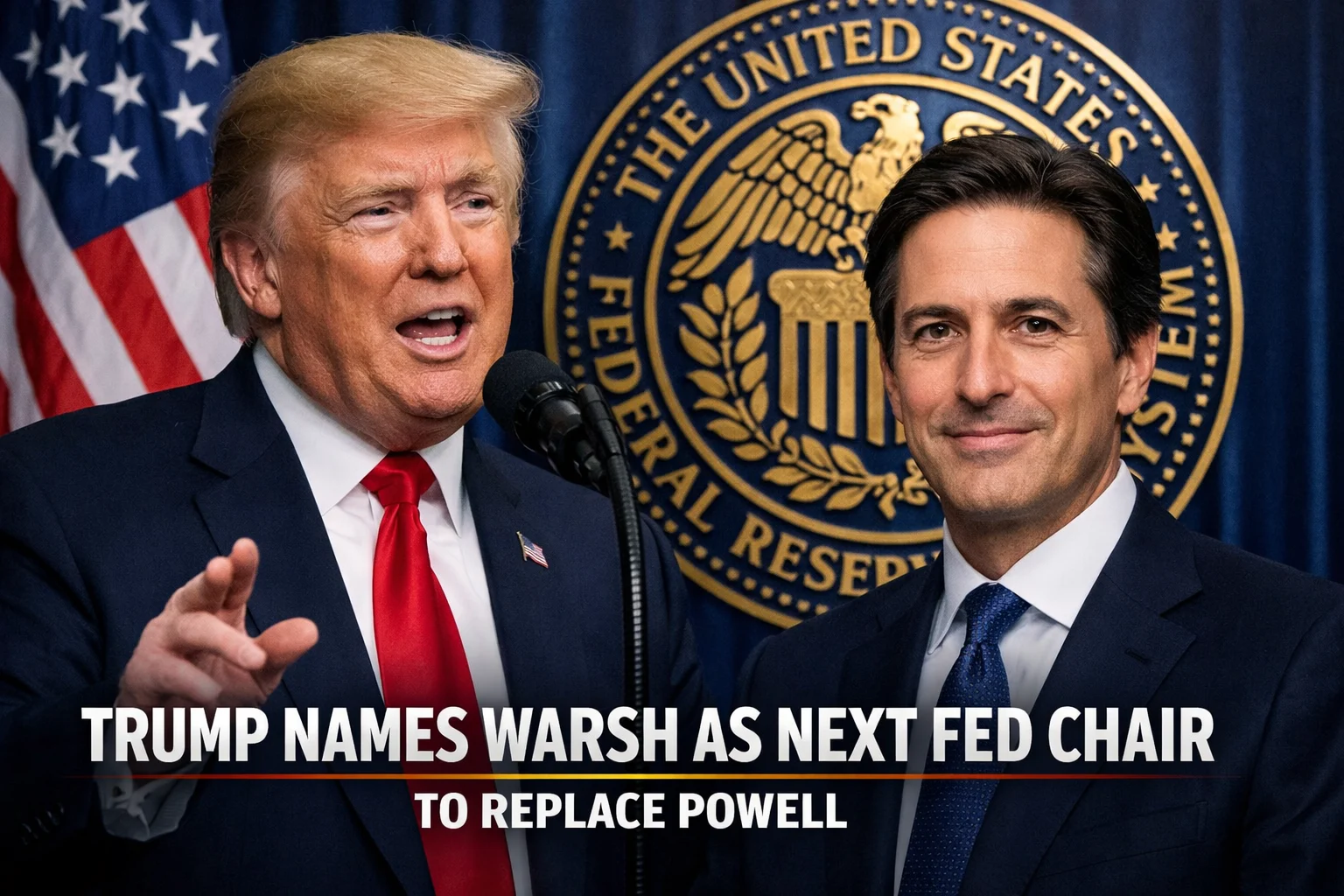
West Wood blvd – 14 May 2026 | Washington — In a decisive 54-45 vote, the Senate confirmed Kevin Warsh as the next chairman of the Federal Reserve, ushering in a new era for the world’s most influential central bank at a time of soaring inflation and heightened political scrutiny.
The confirmation, largely along party lines, saw every Republican senator and Democrat John Fetterman of Pennsylvania supporting Warsh, while the remaining Democrats opposed the nomination. Warsh, 56, previously served as a governor on the Fed board under President George W. Bush, making him one of the youngest members in the institution’s history.
Warsh steps into the chairmanship as the Fed grapples with inflation that has lingered above its 2% target for five consecutive years, driven in part by volatile gas prices and broader energy market disruptions. The Federal Open Market Committee (FOMC) has been split on the pace of interest‑rate hikes, recording the most dissenting votes in over three decades during its last meeting.
President Donald Trump has been an outspoken critic of the current monetary stance, repeatedly urging a faster cut in rates despite the inflationary backdrop. The administration’s pressure intensified after a Justice Department probe into outgoing Chair Jerome Powell’s Senate testimony was dropped in April, a development that had previously threatened Warsh’s confirmation.
Senate Majority Leader John Thune highlighted the need for a chair who “understands both the macro and the microeconomy,” emphasizing the impact on everyday Americans. He praised Warsh as the candidate who can balance the dual mandate of price stability and maximum employment.
Key challenges awaiting Warsh include:
- Reining in inflation without triggering a recession.
- Maintaining the Fed’s independence amid continued executive criticism.
- Coordinating policy with a Treasury that is pursuing aggressive fiscal measures.
- Addressing the potential departure of Jerome Powell from the board, which could create a competing power center within the central bank.
Economic advisers close to the White House, such as Kevin Hassett of the National Economic Council, have expressed optimism that Warsh’s tenure may lead to a gradual easing of rates, describing the market’s reaction as “relieved.” Hassett stressed that any policy shift would be data‑driven and free from political pressure.
Warsh’s background blends finance and public policy. After earning a degree in public policy from Stanford and a cum laude law degree from Harvard, he worked on Wall Street for Morgan Stanley before moving into government service. His prior experience on the Fed board gives him insight into the institution’s inner workings, a factor that may prove crucial as the board navigates internal divisions.
![Trump threatens Boebert [titlebase]: GOP Rift Deepens as President Targets Colorado Rep Over Massie Alliance](https://westwoodblvd.com/wp-content/uploads/2026/05/trump-threatens-boebert-titlebase-gop-rift-deepens-as-president-targets-colorado-rep-over-massie-alliance-300x169.webp)
While the Senate’s vote confirms Warsh’s appointment, the broader debate over the Fed’s role in a politicized environment continues. Critics warn that persistent political interference could erode the central bank’s credibility, while supporters argue that a more aggressive stance on rate cuts could boost growth and stabilize markets.
As Warsh prepares to assume the chairmanship, the nation watches closely. The decisions made in the coming months will shape borrowing costs, influence employment trends, and determine whether the United States can tame inflation without sacrificing economic momentum.
In conclusion, Kevin Warsh’s confirmation marks a pivotal moment for U.S. monetary policy. Balancing the demands of a divided Federal Reserve, a politically charged White House, and a public weary of rising prices will define his legacy and the future health of the American economy.