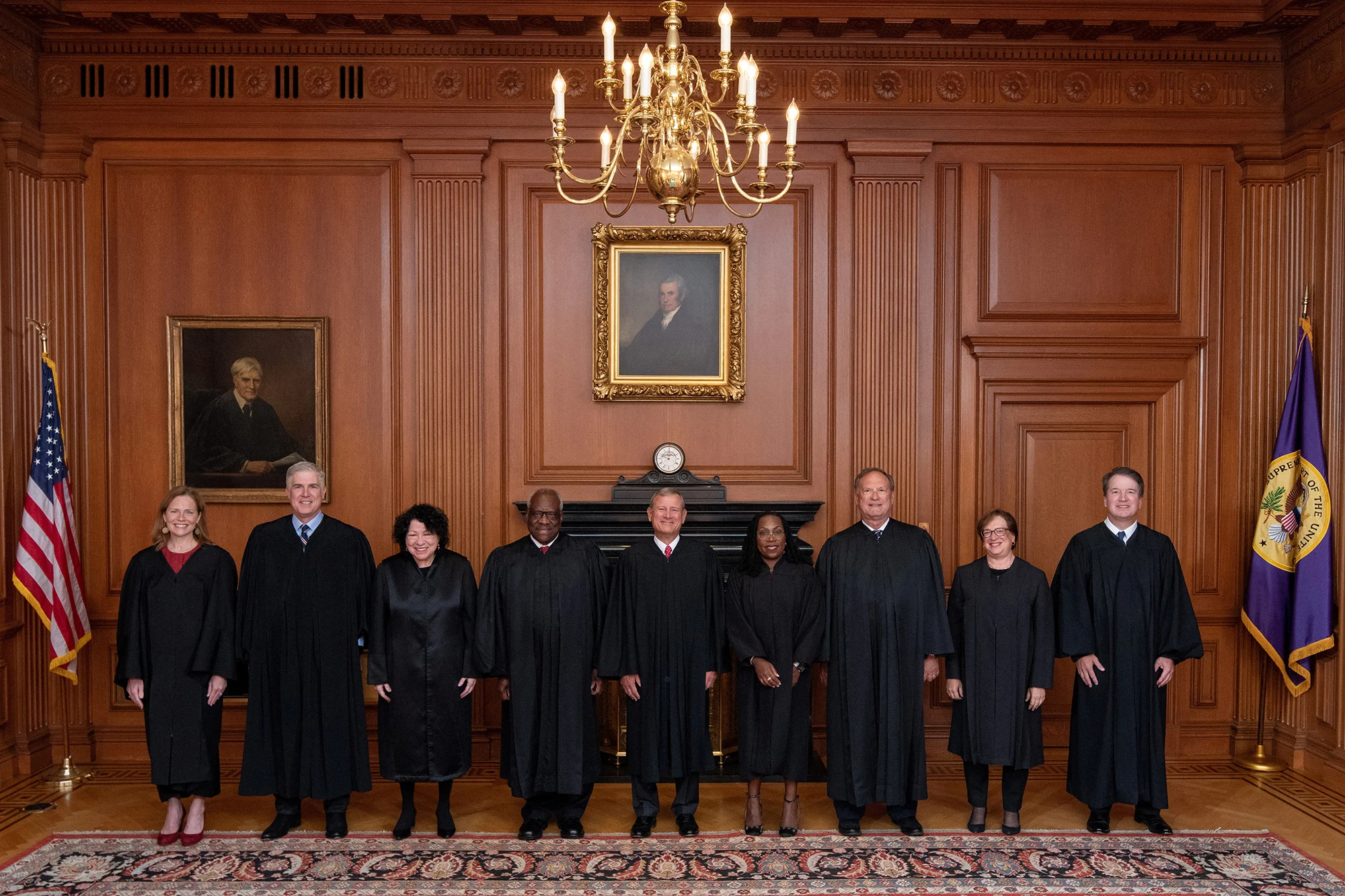
West Wood blvd – 13 May 2026 | The appointment of ketanji brown jackson to the Supreme Court in 2022 marked a historic moment for the nation’s highest judicial body, bringing a new perspective to a bench increasingly defined by ideological battles.
Justice Jackson, the first Black woman to serve on the Court, quickly became a focal point in debates over judicial philosophy. Her meticulous opinions and willingness to challenge the majority have drawn both praise and criticism, reflecting a broader national conversation about the role of empathy, activism, and originalism in American jurisprudence.

Across the aisle, Justice Clarence Thomas celebrated a personal milestone on May 7, 2026, when he surpassed Stephen Johnson Field and John Paul Stevens to become the second‑longest‑serving justice in Supreme Court history. Sworn in by President George H.W. Bush in 1991, Thomas now boasts more than 34 years on the bench, second only to the late William O. Douglas. His tenure underscores the Court’s evolving composition: a mix of long‑standing originalists like Thomas and newer voices such as Jackson.
The contrast between Thomas’s originalist stance and Jackson’s more pragmatic approach has intensified scrutiny of the Court’s direction. In a recent dissent related to Louisiana v. Callais, Justice Jackson accused the majority of acting out of pure partisanship, arguing that the Court was “unshackling itself” and “diving into the fray.” The dissent sparked a sharp rebuttal from Justice Samuel Alito, highlighting the deepening fissures within the nine‑member body.
Political commentators have seized on these internal clashes. In a May 8, 2026 opinion piece, Rich Lowry argued that Jackson is “hell‑bent on destroying the Supreme Court,” suggesting that progressive forces aim to delegitimize the institution to reshape it from within. Lowry’s framing reflects a broader narrative among conservatives that view recent Court decisions as evidence of a left‑leaning agenda overtaking a historically neutral arbiter.
Meanwhile, cultural critics like Dr. Gad Saad warn of a different danger: “suicidal empathy.” In his May 10, 2026 essay, Saad contended that excessive empathy, especially when wielded for political ends, can erode societal resilience. While Saad’s thesis focuses on liberal politics, the underlying theme resonates with the current judicial climate, where empathy‑driven arguments often surface in landmark cases involving civil rights, voting access, and criminal justice reform.

Jackson’s jurisprudence frequently incorporates a nuanced understanding of lived experience, a method some interpret as empathetic reasoning. Critics claim this approach risks compromising legal objectivity, while supporters argue it restores fairness to a system historically blind to marginalized voices. The tension mirrors the broader cultural debate: how to balance the rule of law with the moral imperative to address systemic inequities.
Recent Court activity illustrates the stakes. In a series of decisions over the past year, the Court has ruled on voting‑rights restrictions, abortion access, and the scope of executive power. A concise overview:
- Voting Rights: The Court upheld a state law tightening voter‑ID requirements, prompting concerns about disenfranchisement.
- Abortion: A narrow majority affirmed a state ban on certain late‑term procedures, intensifying the national debate.
- Executive Power: The Court limited the President’s authority to reallocate funds for border security, citing separation‑of‑powers principles.
Each ruling revealed the ideological balance at play, with Jackson often positioned as a swing vote. Her decisions can tip the scales, making her a pivotal figure in shaping the nation’s legal landscape for decades to come.
As the Court navigates these turbulent waters, the personal histories of its members add another layer of complexity. Thomas’s early life, including a stint with the Black Panthers and a dramatic turn away from religious institutions, informs his steadfast originalist convictions. Jackson’s background in public defense and the federal judiciary equips her with a perspective rooted in real‑world impacts of legal rulings.

Ultimately, the Supreme Court stands at a crossroads where historical legacy, political pressure, and evolving social values intersect. Whether the institution emerges as a stabilizing force or a battleground for partisan agendas will depend on how justices like Ketanji Brown Jackson and Clarence Thomas interpret the Constitution in an era of rapid change.
In the months ahead, observers will watch closely as the Court addresses cases that could redefine voting rights, reproductive freedoms, and executive authority. The interplay between empathy‑driven jurisprudence and originalist doctrine will shape not only legal outcomes but also public confidence in the judiciary’s role as a neutral arbiter.
Regardless of the outcome, the presence of Ketanji Brown Jackson on the bench ensures that the Supreme Court will continue to reflect the nation’s diverse experiences, challenging the institution to reconcile its historic foundations with the demands of a modern, pluralistic society.