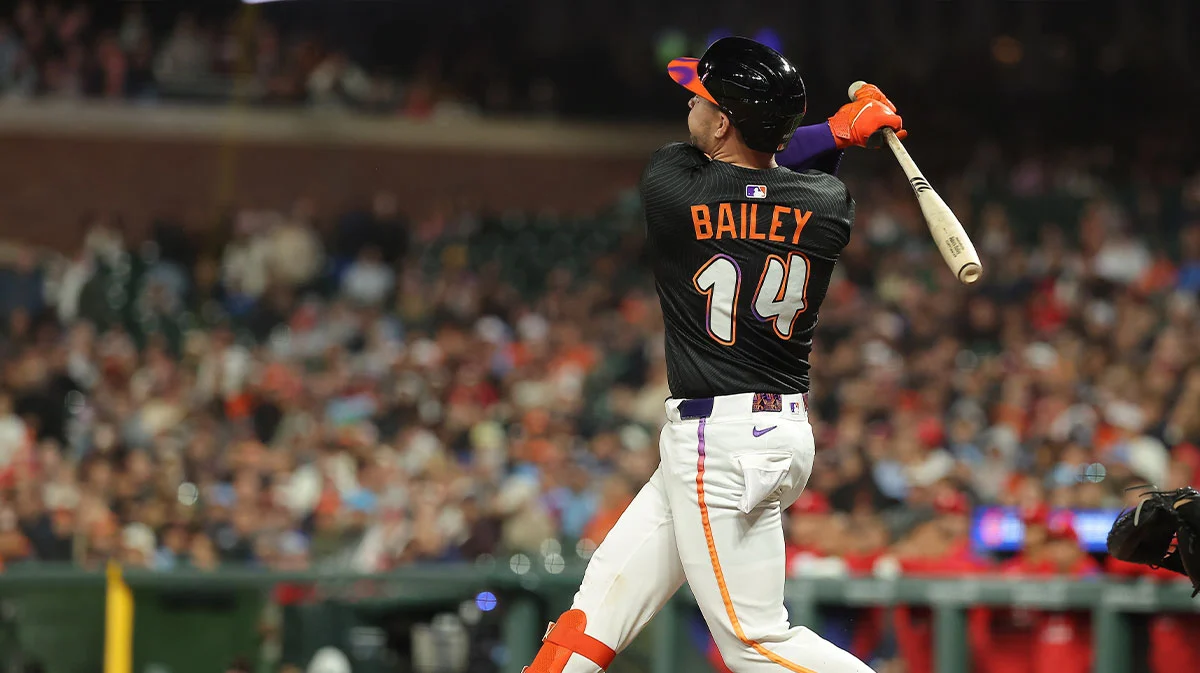
West Wood blvd – 13 May 2026 | In a dramatic turn of events that has reverberated through Major League Baseball, the San Francisco Giants completed a deal that sent two-time Gold Glove catcher Patrick Bailey to the Cleveland Guardians. The move, widely discussed among analysts, underscores President of Baseball Operations Buster Posey’s willingness to reshape the roster with a mix of youth and strategic assets. Notably, veteran catcher Eric Haase remained on the Giants’ depth chart, offering a seasoned presence as the club navigates the early‑season slump.
The trade, finalized on a Saturday morning, brought left‑handed pitching prospect Matt “Tugboat” Wilkinson and the Competitive Balance A pick No. 29 in the 2026 draft to San Francisco. The Guardians, in return, acquired Bailey, whose defensive prowess has earned him two Gold Glove awards and a reputation as perhaps the best framer in the modern game. While his offensive numbers have dwindled—posting a .396 OPS over 89 plate appearances this season—the Giants evaluated his overall value through a defensive‑first lens.
Posey’s philosophy, rooted in his own experience as a catcher for the Giants from 2009 to 2021, prioritizes a catcher’s ability to manage a pitching staff. Sources close to the front office suggest that this philosophical stance clashed with Bailey’s modern defensive metrics, which emphasize framing, pop time, and advanced analytics. The rift between the two grew evident during back‑to‑back losses to the Philadelphia Phillies at Citizens Bank Park, where the Giants were walked off in both games of a doubleheader on April 30.
With Bailey’s departure, the Giants turned to a youthful catching tandem: 24‑year‑old Jesús Rodríguez and 24‑year‑old Daniel Susac. Rodríguez, who has already seen limited major‑league action, impressed with a .273 batting average in his brief stint, while Susac recovered from right elbow ulnar neuritis in Triple‑A Sacramento. Posey expressed confidence in the duo, noting that their defensive strides and offensive contributions could provide the spark the team needs to climb out of a 16‑24 start.
Eric Haase, the veteran backup catcher, found his role amplified amid the roster shuffle. Haase, who has spent the majority of his career as a reliable defensive option, was slated to mentor the young catchers while still offering occasional starts. His presence also gave Posey flexibility to experiment with lineups without sacrificing defensive integrity. Haase’s experience, combined with his ability to handle a diverse pitching staff, made him a valuable piece in the Giants’ broader plan to rebuild.
The trade also reflects a broader trend in MLB where teams balance traditional scouting with data‑driven evaluations. While Bailey excelled in framing and pop time—metrics that have become increasingly valued—Posey’s emphasis on pitcher‑catcher rapport harkens back to an older school of thought. This philosophical tug‑of‑war illustrates the evolving nature of the catcher position, where both old‑school instincts and new‑school analytics vie for supremacy.
Financially, the addition of the No. 29 draft pick provides the Giants with an extra $3.7 million in slot value, raising their total draft pool to $17.35 million, the fourth‑largest among MLB clubs. This financial cushion could enable San Francisco to target high‑upside prospects in the upcoming draft, further reinforcing Posey’s long‑term vision of building a sustainable, home‑grown core.
From the Guardians’ perspective, acquiring Bailey bolsters a catching corps that has struggled with consistency. Manager Stephen Vogt praised Bailey’s defensive acumen, suggesting that his elite framing and game‑calling abilities could help the Guardians’ young pitching staff develop more quickly. The trade also signals Cleveland’s willingness to invest in defensive specialists, even at the cost of a high draft pick.
As the Giants embark on a three‑city road trip, the immediate focus will be on how Rodríguez, Susac, and Haase perform behind the plate. Early indicators suggest that the rookie duo can handle the pressure, but the veteran steadiness of Eric Haase will likely be the stabilizing factor during the transition. Posey’s willingness to make bold moves—exemplified by the Giants trade Bailey—underscores a commitment to reshaping the franchise’s identity.
In conclusion, the Giants trade Bailey saga is more than a simple player exchange; it is a window into the evolving philosophies that guide modern baseball front offices. By balancing the promise of youth, the reliability of veterans like Eric Haase, and strategic financial assets, San Francisco aims to reverse its early‑season struggles and set a foundation for future success.